
For years, spreadsheets have been the backbone of logistics operations. Dispatchers tracked loads in Excel, managers monitored fleet activity through manually updated documents, and billing information was often scattered across multiple files. While this approach worked in the past, the complexity of modern trucking operations has exposed the limitations of spreadsheet-based logistics management.
Today’s freight industry moves faster than ever, and companies relying on manual tools are finding it increasingly difficult to keep up.
The Limits of Spreadsheet-Based Dispatching
Spreadsheets are flexible, but they were never designed to manage the real-time demands of freight operations. Dispatchers working with Excel often have to manually update load details, driver assignments, delivery times, and equipment availability. As operations grow, these files become larger, more complex, and significantly harder to manage.
The result is often a system that depends heavily on manual input and constant oversight. Even small mistakes, such as entering incorrect load details or forgetting to update a status, can lead to confusion, missed deadlines, or costly operational errors.
In a business where timing and accuracy are critical, relying on spreadsheets introduces unnecessary risk.
When Growth Becomes a Problem
Many carriers start with spreadsheets because they are easy to set up and familiar to most office staff. However, as fleets expand and the number of loads increases, the system quickly becomes difficult to maintain.
Multiple dispatchers editing the same files can create version conflicts. Important data may end up scattered across different spreadsheets, emails, or messaging platforms. Searching for specific load information can take far longer than it should, slowing down daily operations.
Instead of supporting growth, spreadsheets often become a bottleneck.
The Need for Real-Time Visibility
Modern logistics operations require instant access to information. Fleet managers need to know which vehicles are available, which loads are in transit, and when maintenance is due, all without digging through multiple documents.
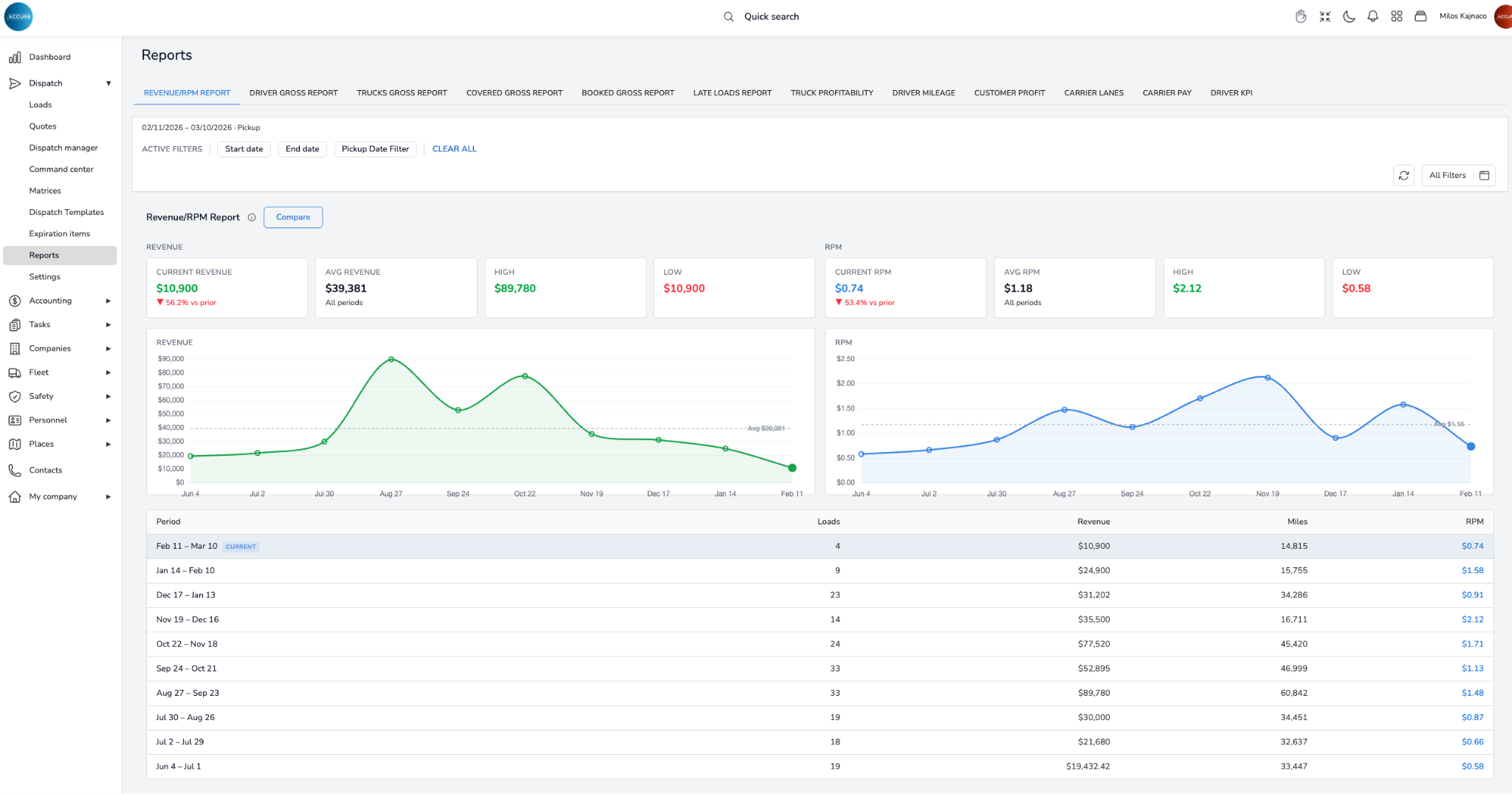
A transportation management system provides a centralized platform where all operational data is organized and instantly accessible. Dispatchers can quickly search loads, track equipment availability, and manage operations from a single interface.
This level of visibility significantly reduces the time spent searching for information and allows teams to focus on making faster, better decisions.
Automation Is Replacing Manual Work
One of the biggest advantages of modern TMS platforms is automation. Tasks that once required manual entry can now be completed automatically, reducing both workload and human error.
For example, modern systems can automatically organize load information, schedule maintenance reminders, and streamline billing processes. Accur8 TMS even incorporates artificial intelligence to simplify load creation by extracting data directly from documents such as PDFs or images.
Automation allows dispatchers to focus on coordination and decision-making rather than repetitive administrative work.
Why the Industry Is Moving Forward
As logistics operations become more complex, companies are increasingly replacing spreadsheet-based workflows with dedicated transportation management systems. The transition isn’t just about technology, it’s about efficiency, reliability, and scalability.
Modern platforms provide faster access to information, better operational oversight, and tools designed specifically for the challenges of the freight industry.
Solutions like Accur8 TMS are built to support dispatchers, carriers and other staff with a unified system that simplifies fleet management, load tracking, billing, and maintenance scheduling.
Instead of juggling multiple spreadsheets and disconnected tools, teams can manage everything through a single platform designed for speed and reliability.
Moving Beyond Spreadsheets
Spreadsheets played an important role in the early days of digital logistics management, but the industry has outgrown their capabilities. As fleets grow and operations become more demanding, companies need systems that can keep pace with real-time freight operations.
The shift toward dedicated transportation management systems reflects a broader trend across the logistics industry: replacing manual processes with smarter, faster, and more reliable tools.
For companies looking to improve efficiency, reduce errors, and scale their operations, the end of spreadsheet logistics may already be here.
Schedule a free demo and find out how Accur8 TMS offers a seamless and easy transition from archaic ways of dealing with logistics to the modern way of automation!